
Downsizing Your Family Home: A Room-by-Room Strategy

Standing in a home filled with two decades of family life (school projects, holiday decorations, hand-me-down furniture), the idea of downsizing can feel less like a fresh start and more like an impossible task. That feeling is completely normal. But here's the reframe worth holding onto: downsizing isn't about losing what matters. It's about creating a home where everything earns its place and peace of mind comes naturally.
The key is having a plan. A room-by-room declutter breaks an overwhelming project into manageable pieces, builds momentum as you go, and prevents the burnout that comes from trying to tackle everything at once. Whether you're relocating from a large suburban lot or transitioning from a sprawling rural property, this guide from Five Star Storage will walk you through every space, practically and honestly.
One more thing to set expectations: downsizing a family home is measured in weeks, not weekends. Give yourself that time, and the process will feel far less daunting than it looks from the starting line.
Why Downsizing Feels Overwhelming And How To Change That
The emotional weight of sorting through years of family belongings is real. A child's first drawing, the dining table where holidays happened, boxes of keepsakes that haven't been opened in years. These objects carry stories, and deciding their fate takes mental energy. Acknowledging that upfront is the first step toward making the process manageable.
There's also a practical connection worth making: a cluttered home often creates a cluttered mind. Research consistently links physical disorder to elevated stress and reduced focus. Clearing space isn't just about square footage; it genuinely restores peace of mind. That's the lifestyle upgrade hiding inside what feels like a loss.
The room-by-room approach works because it gives you a clear starting point every day. You're not staring at the whole house; you're just finishing the kitchen. That shift in perspective changes everything. Explore how clutter affects stress and how self storage can help if you want to understand the psychology behind why clearing space feels so good.
Kitchen and Living Areas: Declutter the High-Traffic Zones First
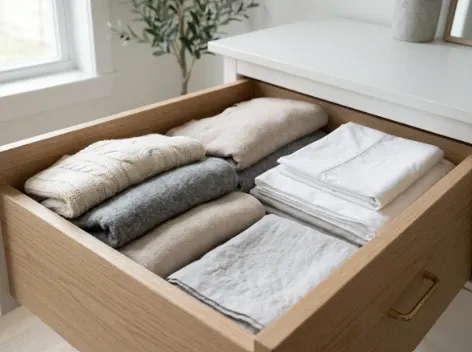
Starting with the kitchen is strategic. It's used every day, decisions come quickly, and early wins build the confidence you'll need for harder rooms later. Sort everything into three categories:
- Daily use: These items move with you
- Occasional use: Candidates for storage or a second look
- Donate or sell: Duplicates, unused appliances, items that haven't earned their counter space
Apply a simple one-in, one-out rule to countertop appliances and cookware. If you own three sets of pots and regularly use one, that's two sets ready for a garage sale. In the living room, focus on furniture scale. Oversized sectionals and bulky entertainment centers rarely translate well to a smaller floor plan. Check the unit size dimensions of your new space before moving day; measuring twice saves a costly mistake.
Practical solutions like wall-mounted shelving and ottomans with hidden storage maximize space without sacrificing comfort or style.
Bedrooms and Closets: Making Every Square Foot Count
Closets are where downsizing decisions get personal. A seasonal rotation system helps enormously: offseason clothing and bedding move to a climate-controlled storage unit, helping to keep them in top condition year round without crowding your bedroom closet. This is especially practical through long Midwest winters when bulky coats and gear take up disproportionate space.
Not everything needs to live under your roof to remain part of your family's story. A well-organized storage unit can hold those memories while your new home stays breathable and calm.
Inside the closets you do keep, small upgrades make a real difference:
- Double-hang rods effectively double hanging capacity
- Slim velvet hangers reclaim inches that wire hangers waste
- Over-door organizers turn dead space into functional storage

For families with college-aged kids, student storage solutions bridge the gap between dorm life and home perfectly.
Garage, Basement, and Attic: Tackling the Toughest Rooms Last
Save these spaces for last. They tend to hold the most accumulated items and require the most decision-making energy. By the time you reach the garage, you'll have built real momentum and a clearer sense of what actually matters to keep.
Work through everything using four clear piles: keep, store, donate, and discard. Be honest about tools, sports equipment, and hobby gear that hasn't been touched in years. If it's been sitting idle through two North Dakota winters, it's probably not coming back into rotation.
For inventory overflow (seasonal gear, holiday decorations, power tools), a drive-up access storage unit makes loading and retrieving items straightforward. For temperature-sensitive belongings like wooden furniture, electronics, and family photo albums, a temperature-stable environment is far better than an uninsulated garage or attic. Learn how climate-controlled storage helps to secure your most valuable items through seasonal temperature swings.
Before you lock up your unit, upgrade your security. A disc lock offers significantly stronger protection than a standard padlock and is a smart investment for long-term storage. It's a small step that delivers real peace of mind.
Your First Steps Toward a Simpler, More Intentional Home
The room-by-room strategy works because it's honest about human energy. Starting with high-traffic areas like the kitchen builds early confidence. Saving the garage and basement for last preserves your decision-making capacity for the spaces that need it most.
Downsizing a family home in the Midwest, whether you're moving across Bismarck or relocating to a smaller city, is a process that rewards patience and planning. Neighborhood experts who understand local needs can help you identify the right unit size dimensions for your situation, so nothing gets left behind and nothing gets crammed in. View Five Star's storage unit pricing in Bismarck to get a practical sense of your options before you commit.
Here's your next step: walk through one room this week. Fill one donation box. Then use our storage size guide to figure out what unit fits your needs. Small, consistent actions are what turn an overwhelming project into a life-changing one, and a home full of stuff into a home full of purpose.