Off-Season Storage for Hunting and Fishing Gear
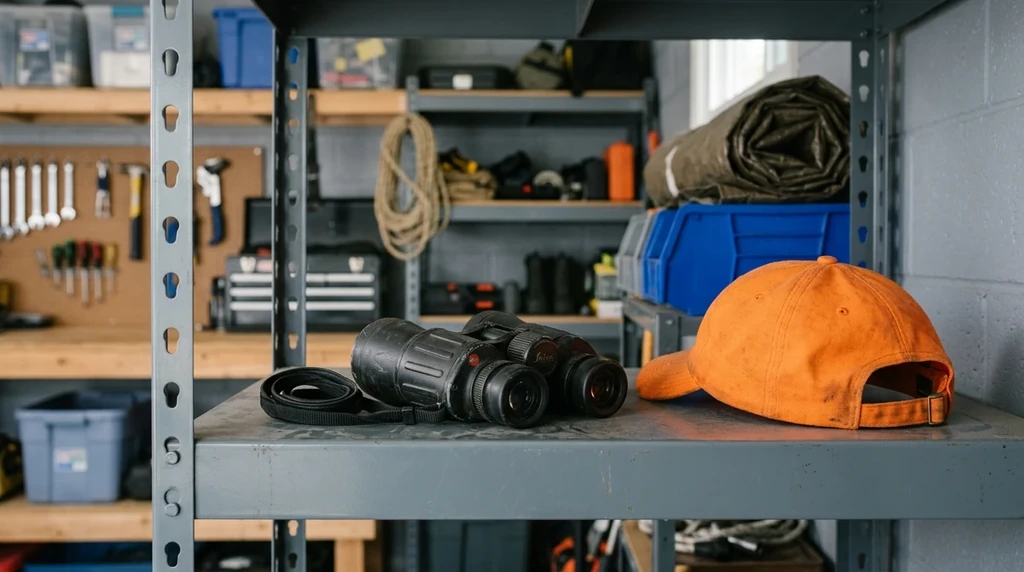
The season closes, the truck gets unloaded, and suddenly your garage is buried under waders, rod cases, decoys, and a pile of gear that has nowhere obvious to go. Hunting gear storage becomes a real logistical question at that point, not just a matter of finding a corner to stack things. How you store this equipment between seasons affects how it performs when you pull it back out months later.
Clean Everything Before It Goes Into Storage
Storing gear that hasn't been properly cleaned is one of the most common mistakes hunters and anglers make. Residue left on fishing reels can corrode internal components, and scent transferred to hunting clothing can work its way into other items stored in the same space. Mud and debris left on boots or waders are worth addressing too, since they can degrade the material over a long offseason.
Before anything goes into a unit or a bin, wipe down hard equipment, rinse reels and let them dry fully, and launder hunting clothing according to the manufacturer's instructions. Rods should be broken down and stored in their cases. Decoys benefit from a rinse and a dry before stacking. A little prep work at the end of the season means your gear is actually ready to use when the opener rolls around again.
Organize by Season and Use Frequency
Not all of this gear gets used on the same schedule. Duck season, deer season, and open-water fishing all run on different timelines. Grouping equipment by when you'll need it next makes retrieval straightforward and keeps you from digging through ice fishing gear to find your turkey vest in April.
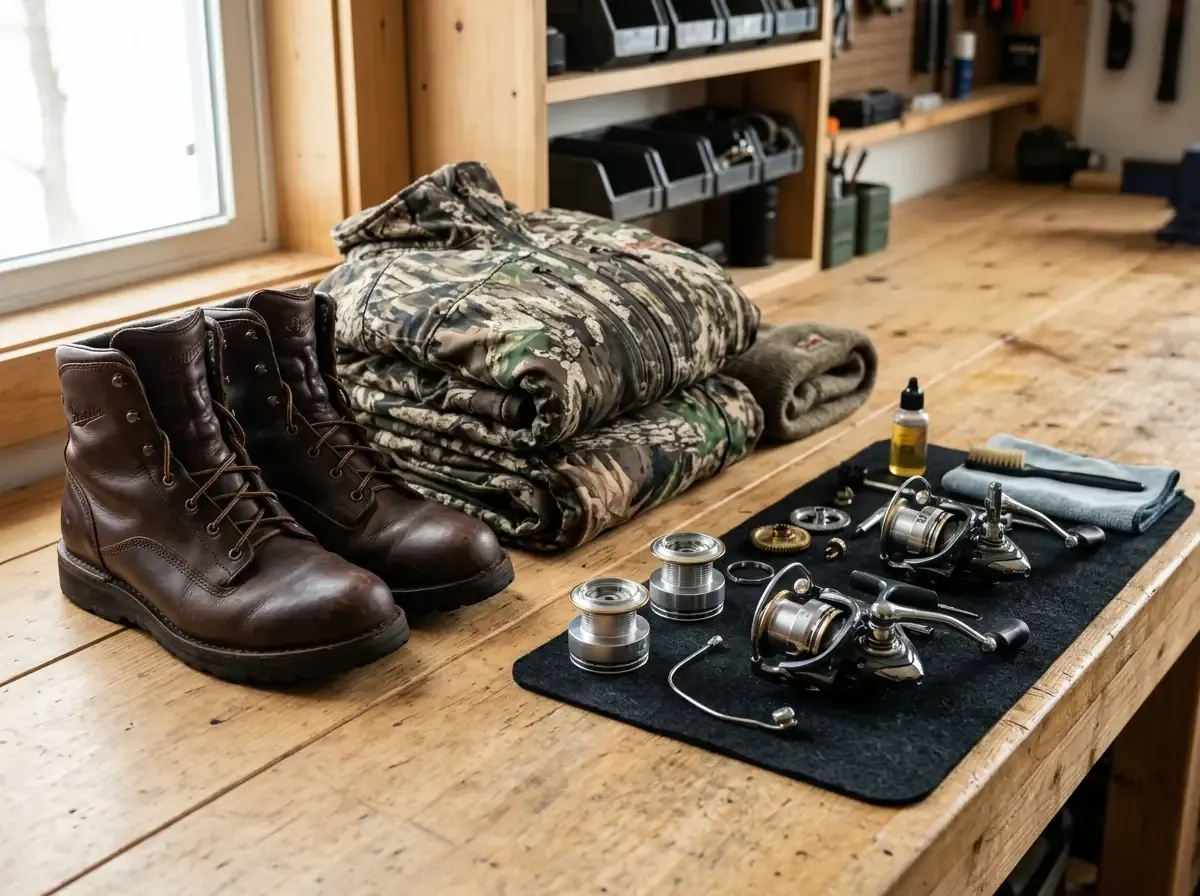
Clear bins with labeled lids work well for smaller items like tackle, calls, and accessories. Longer items like rods, bows, and gun cases do better stored upright or laid flat in a dedicated rack rather than stacked under other gear. If you're storing multiple seasons' worth of equipment, our detailed guidance on storing hunting gear can help you think through the layout before you commit to a system.
Consider a Climate-Controlled Unit for Sensitive Equipment
Certain items in a typical hunter's or angler's kit are sensitive to temperature swings. Bow strings can lose tension when stored in spaces that cycle through extreme heat and cold. Beyond archery equipment, electronics like fish finders and trail cameras tend to degrade faster in unregulated environments, and leather boots or gloves stored through a harsh offseason can come out cracked and stiff.
A climate-controlled storage unit maintains a consistent temperature range year round, which reduces the risk of this kind of wear. It's worth factoring in if you're storing gear that represents a meaningful investment, particularly optics, electronics, or high-end outerwear. The difference between heated and climate-controlled storage is worth understanding before you choose a unit type.
Right-Sizing Your Unit
Hunting and fishing gear takes up more room than most people expect once it's organized properly rather than crammed together. A full waterfowl spread with decoys, bags, and layout blinds can fill a small unit on its own. Add ice fishing equipment, a kayak or canoe, and the rest of a year-round kit, and you may need more room than a single closet can offer.
Use our unit size guide to get a realistic picture of what fits in each option before you rent. Choosing a unit that's slightly larger than you think you need is almost always the right call when you're storing bulky, irregularly shaped gear.
A dedicated storage unit keeps your gear organized, out of the way at home, and in better condition for the next season. Browse Five Star Storage locations to find a facility near you and reserve a unit before the offseason rush fills available spaces.