
Love Your Mortgage Rate? Get More Space Without Moving

Love Your Mortgage Rate? Get More Space Without Moving
For many homeowners today, space is running out fast. The kids have claimed every corner, the garage holds everything except your car, and the living room has slowly become a staging area for things that don't have a home. More space is clearly needed, but every time you peek at current listings, you're reminded of a hard truth: the house you'd move into would cost significantly more, at a rate that's more than double what you locked in a few years ago.
Today's housing market realities are tough. Home prices remain elevated in most markets, and higher interest rates mean that trading a low mortgage rate for a new one could significantly increase your monthly payment, before you even factor in closing costs, moving expenses, and the potential for a higher property tax bill. For many homeowners, moving up simply doesn't pencil out right now.
But here's the good news: you don't have to choose between your financial peace of mind and a home that actually feels livable. There's a practical, affordable solution that many homeowners are already using, and it doesn't require a for-sale sign in your yard. Physical clutter can create mental stress, affecting sleep, focus, and overall well-being. Clearing that clutter, without uprooting your life, is entirely within reach.
You've Outgrown Your Home, But Not Your Mortgage Rate
The tension is real. You love your mortgage rate but need more space, and today's housing market makes it difficult to justify walking away from the rate you locked in. A home that once felt comfortable can start to feel like it's closing in on you, not because it's actually small, but because life has added layers: a new hobby, a home office, a growing family, or years of accumulated belongings that have slowly taken over.
The good news is that the solution doesn't have to be dramatic. You don't need to list your home, endure months of showings, pay a real estate commission, and sign a new mortgage at a rate that would make your past self cringe. What you need is a smarter way to manage your space, and that's exactly what self storage is designed to do.
The Real Cost of Moving vs. a Monthly Storage Unit
Before you start browsing listings, it's worth doing the math. The true cost of buying a new home right now goes well beyond the sticker price. Add up a higher mortgage rate, closing costs, a moving truck, utility deposits, updated furnishings, and a likely increase in property taxes, and you're looking at tens of thousands of dollars upfront, plus a permanently higher monthly payment.
Compare that to the cost of a self storage unit. Depending on unit size, monthly rates are a fraction of what even a modest increase in mortgage payment would cost you every single month. And unlike a mortgage, storage is a month-to-month commitment, with no long-term financial risk and no penalties for scaling up or down as your needs change.
Here's a simple side-by-side look at how the numbers stack up:
- New home purchase (higher rate): Significantly higher monthly mortgage payment, plus thousands in upfront costs
- Self storage unit: A low monthly cost with no long-term contract, cancel or adjust anytime
- Annual difference: Choosing storage over upsizing could save you thousands of dollars per year
As one of the most affordable alternatives to moving available in today's housing market, self storage gives you the breathing room you need without the financial commitment of a new home. You can check out storage unit pricing options to get a clear sense of what fits your budget before you ever step foot in a facility.
What to Store: Reclaiming Every Room in Your Home
Once you decide to declutter your home without moving, the next question is: what actually goes into storage? The answer might surprise you. Most homes are full of perfectly useful items that simply don't need to live in your primary living space year-round.
Here are some of the most common space-stealing culprits that storage units handle beautifully:
- Seasonal décor: Holiday bins, wreaths, and themed items that sit unused for 10 months of the year.
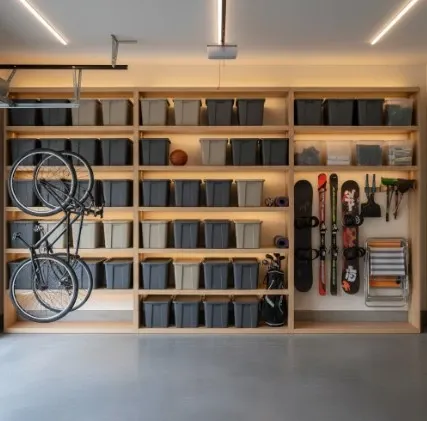
- Sporting and outdoor equipment: Skis, snowboards, bikes, kayaks, camping gear. Items that are essential in season but take up valuable floor space the rest of the year.
- Home-based business inventory: Product overflow, packaging materials, and equipment that's cluttering your workspace.
- Life-transition furniture: A spare bed from a grown child's old room, a desk that no longer fits your home office layout.
When it comes to items like wood furniture, electronics, framed artwork, or cherished keepsakes, a climate-controlled storage unit is well worth the modest upgrade. These temperature-regulated environments maintain a consistent temperature range throughout the year, protecting your belongings from the extreme swings that come with harsh winters and hot summers in the upper Midwest and Great Plains.
For items you need to access more regularly, like tools, hobby gear, or small business supplies, drive-up access units are a practical solution. You pull right up to your unit, load or unload, and get on with your day. Think of your storage unit not as a last resort, but as a smart extension of your home: a dedicated space for the things that matter, organized and ready when you need them.
Choosing the Right Unit Size and Features for Your Needs

One of the most common questions first-time renters have is simple: what size storage unit do I actually need? The answer depends on what you're storing, but here's a practical breakdown of the most common unit size dimensions and what they realistically hold:
- 5x5 (25 sq. ft.): Think of a large walk-in closet. Great for boxes, seasonal décor, small furniture pieces, or a few bags of gear.
- 5x10 (50 sq. ft.): About the size of a standard storage closet. Fits the contents of a small bedroom — mattress, dresser, boxes, and more.
- 10x10 (100 sq. ft.): Equivalent to a spare bedroom's worth of furniture. Handles a full living room set or the overflow from a major home reorganization.
- 10x20 (200 sq. ft.): Comparable to a one-car garage. Ideal for large furniture collections, appliances, or a home-based business with significant inventory needs.
Beyond size, security features matter. Look for facilities that offer disc locks (which are significantly harder to cut than standard padlocks), gated access with personalized codes, and on-site management. These layers of protection give you genuine peace of mind knowing your belongings are secure.
The choice between a standard unit and a climate-controlled one comes down to what you're storing. If your items are sensitive to temperature extremes such as wood furniture that can warp, electronics, vinyl records, photographs, or wine, a temperature-regulated environment is worth the extra cost. Standard units work well for metal tools, plastic bins, and items that aren't affected by seasonal temperature changes.
Not sure which option is right for you? The neighborhood experts at your local Five Star Storage facility are happy to walk you through your options without any pressure. Our unit size guide is also a great starting point for narrowing things down before you visit.
Start Small, Stay Put, and Love Where You Live Again
Try this simple first step: walk through your home and identify two or three areas that feel most cluttered. Maybe it's the garage, the spare bedroom, or the basement. Now imagine those spaces cleared. That mental image of a functional garage, a guest room that actually feels welcoming, a basement your family can enjoy, is entirely achievable without signing a new mortgage.
Self storage is also scalable in a way that home buying simply isn't. Start with a small 5x5 or 5x10 unit to handle the most pressing overflow, and adjust as your needs evolve. There's no long-term commitment tying you down, and no penalty for right-sizing your unit as life changes. That kind of flexibility is rare and genuinely valuable.
The lifestyle benefit is real, too. A cluttered home is connected to elevated stress levels, disrupted sleep, and reduced focus. Clearing the physical clutter from your daily environment creates more breathing room, literally and figuratively. You feel more at ease in your space, more in control of your surroundings, and more comfortable in the home you already love. For a deeper look at that connection, explore how clutter affects your stress levels and how storage can help.
Whether you're in Fargo, Sioux Falls, or anywhere across the Midwest, a Five Star Storage location is nearby and ready to help. Browse our storage locations across the Midwest and Great Plains to find a facility near you, or stop in and talk to one of our team members for a personalized recommendation. You worked hard for that mortgage rate, so let's help you make the most of the home that comes with it.